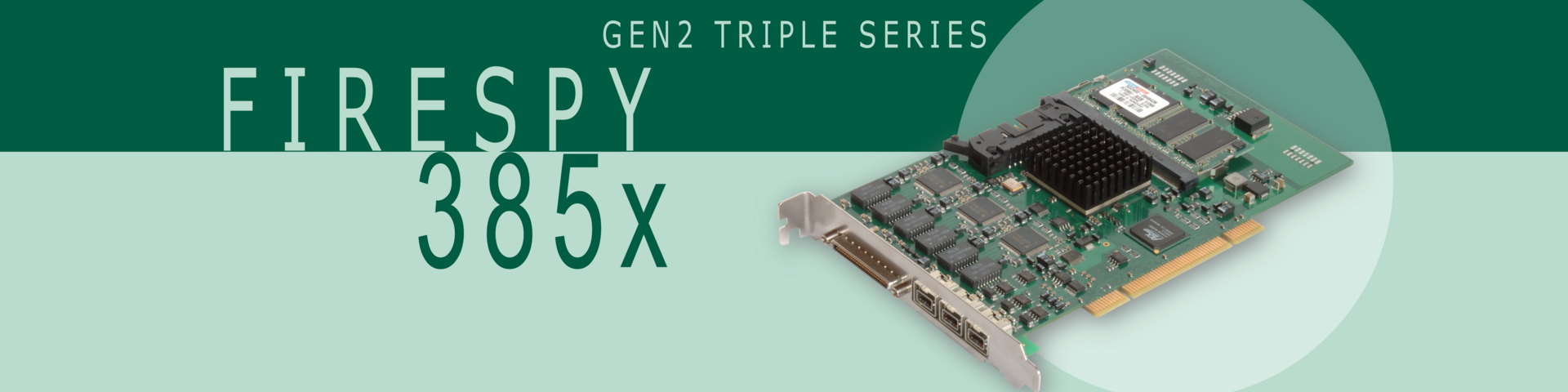
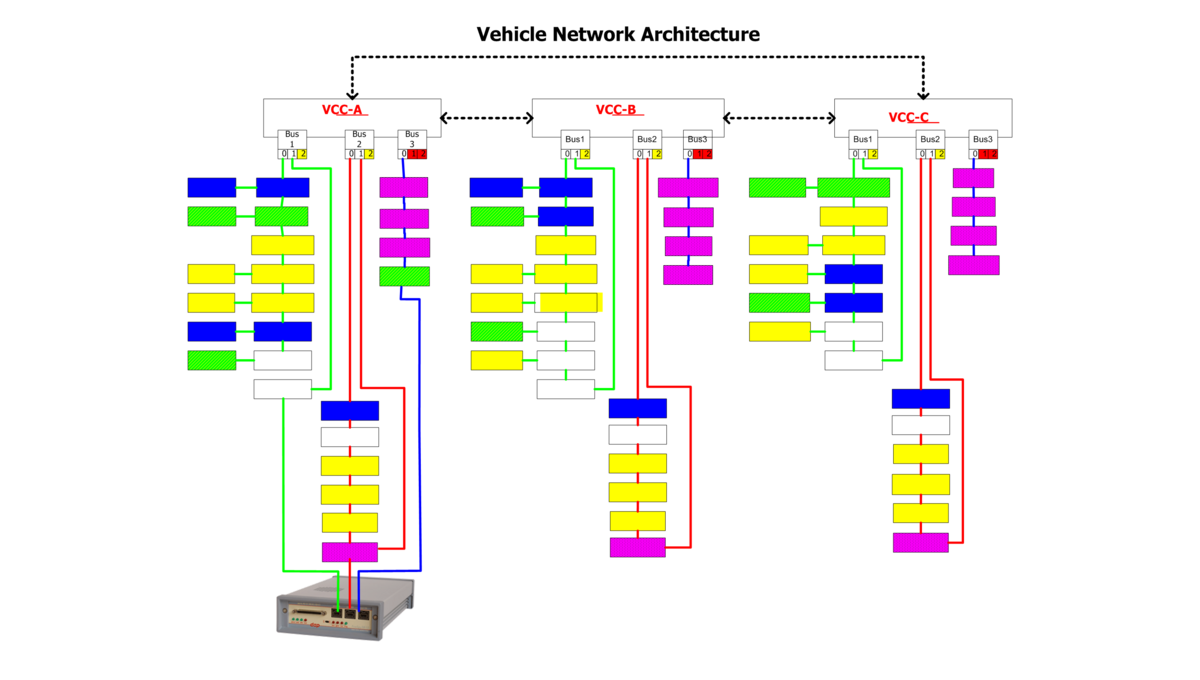
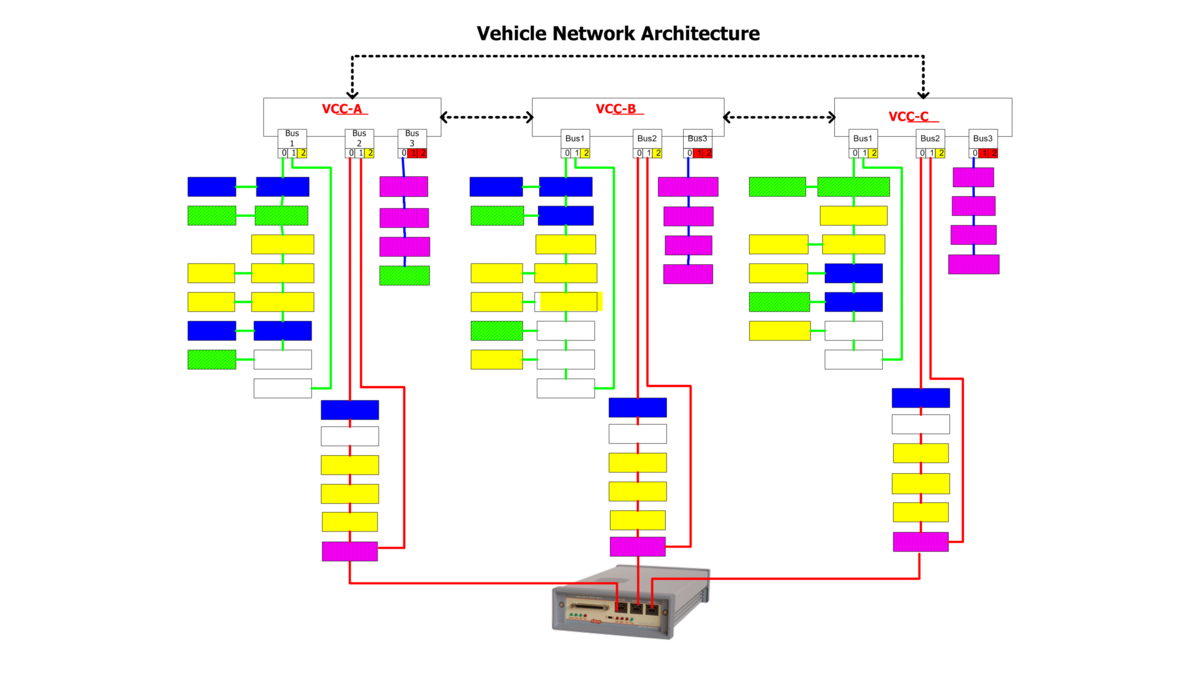
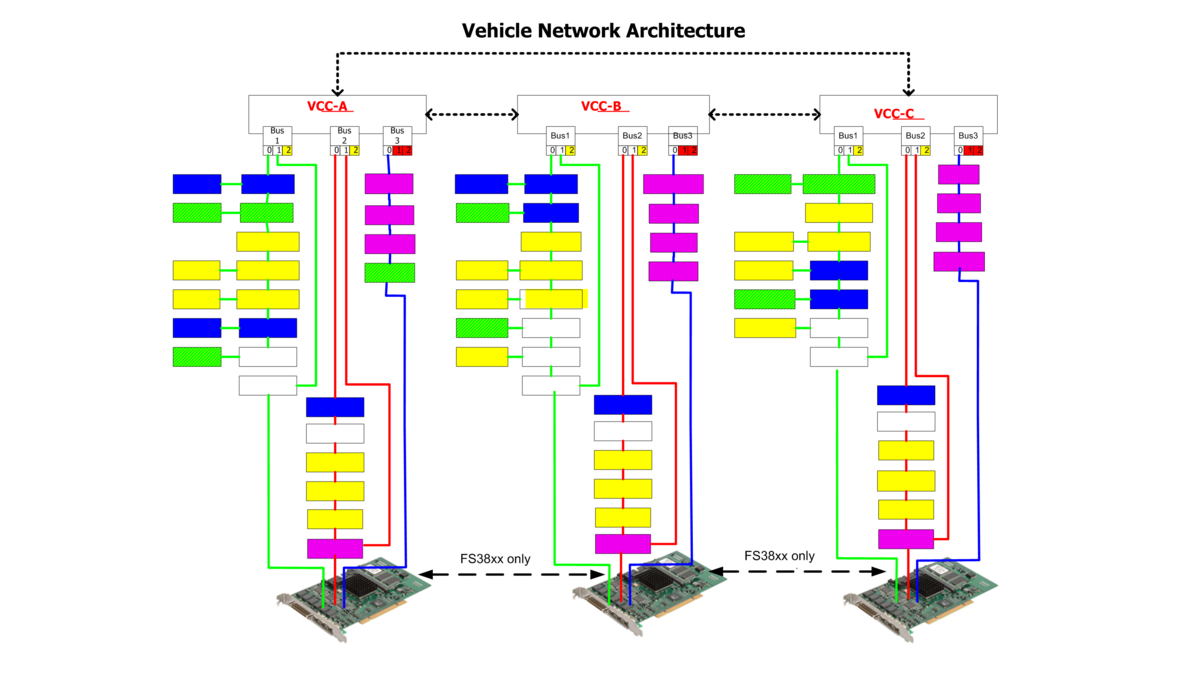
The Triple Series PCI hosted FireSpy 3850, 3851E and 3852 provides three FireSpy bus analyzer engines in one compact package. Designed to meet the requirements of AS5643-based triple-redundant bus architectures, all the FireSpy385x products allow to be connected to three separate IEEE-1394 buses while connecting to three synchronized analysis engines. Based on our 2nd generation hardware platform, the FireSpy385x products contain 1GB internal memory and a powerful processor to provide the resources needed to service all three buses. The 32-bit PCI 2.1 host interface allows communication with the FireSpy to be much faster than similar products with USB 2.0 or Ethernet interfaces.
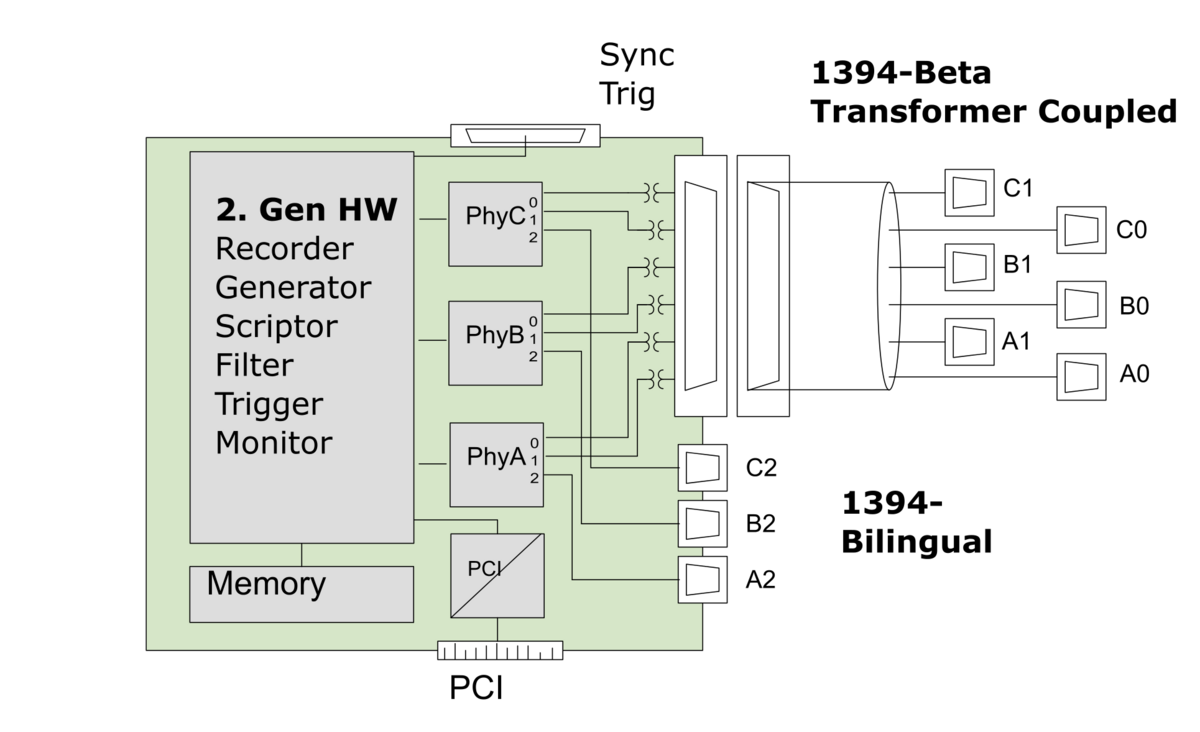
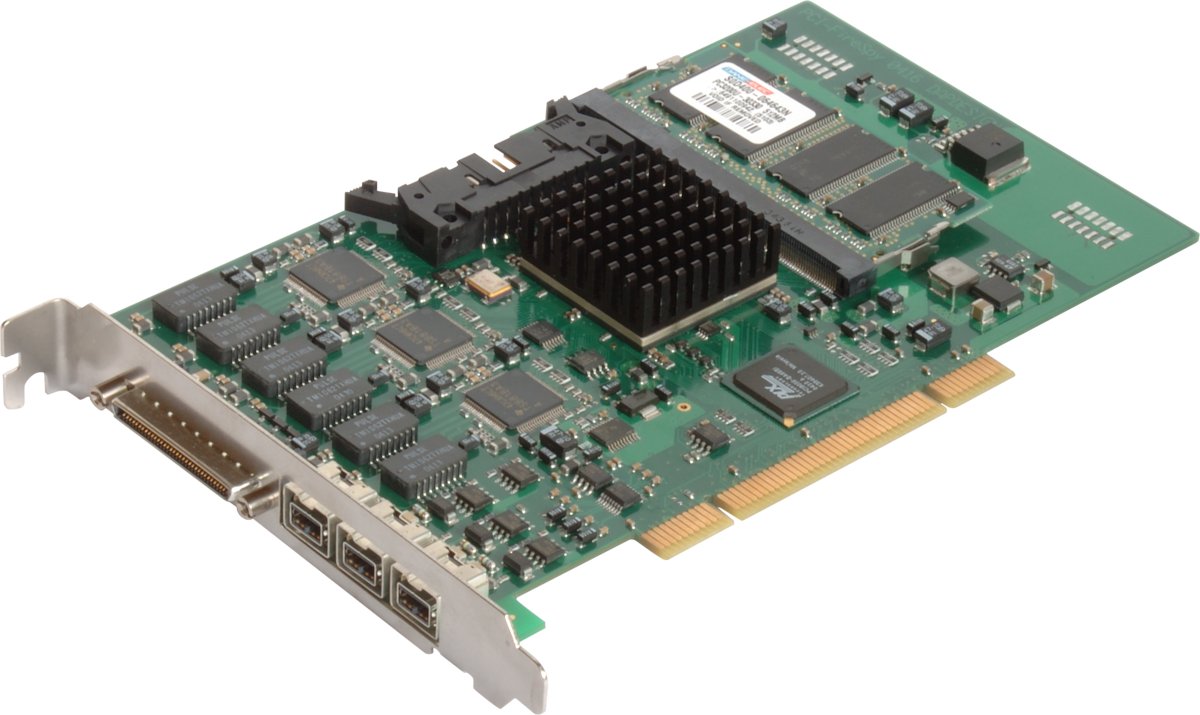
The FireSpy3850 brings out six active transformer coupled ports, two from each bus analyzer engine, through a single high-density (VHDCI) connector to six IEEE-1394 Beta 9-pin cables. Additionally, it has three, one from each bus analyzer, IEEE-1394 bilingual 9-pin connectors.
The FireSpy3851E is the same as the 3850 except it provides mechanical support to help stabilize the VHDCI connection.
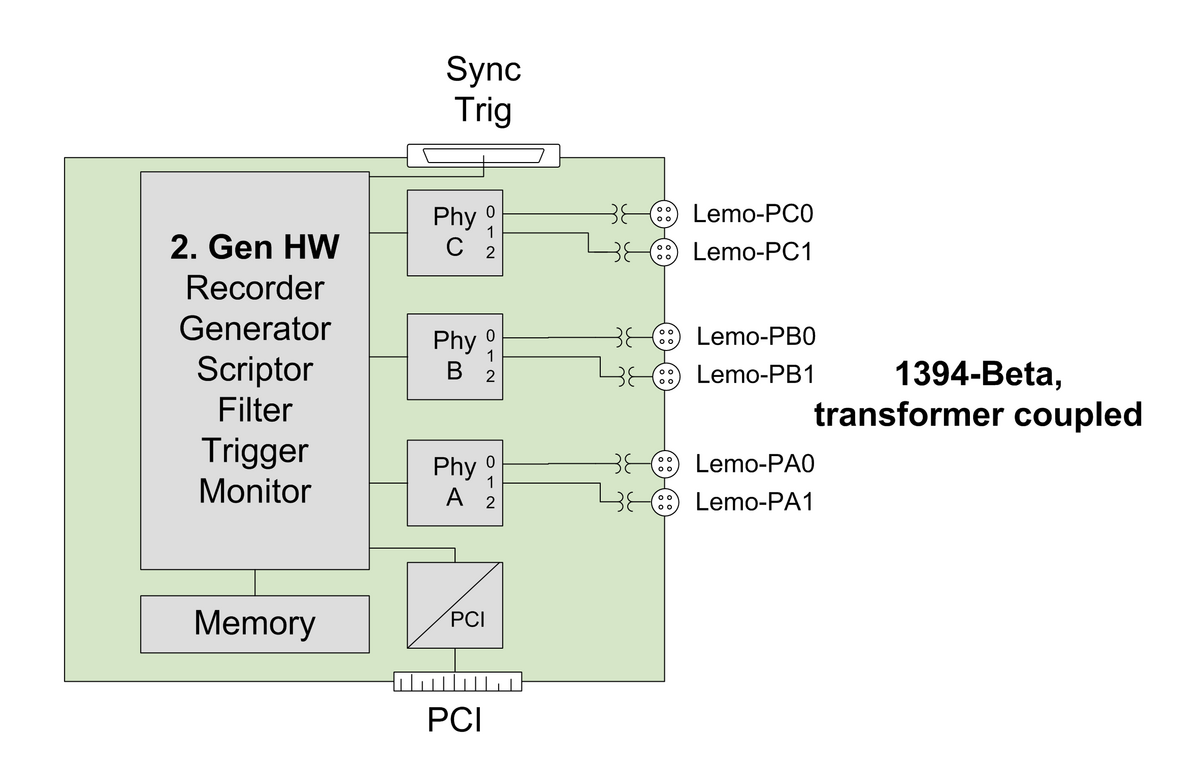
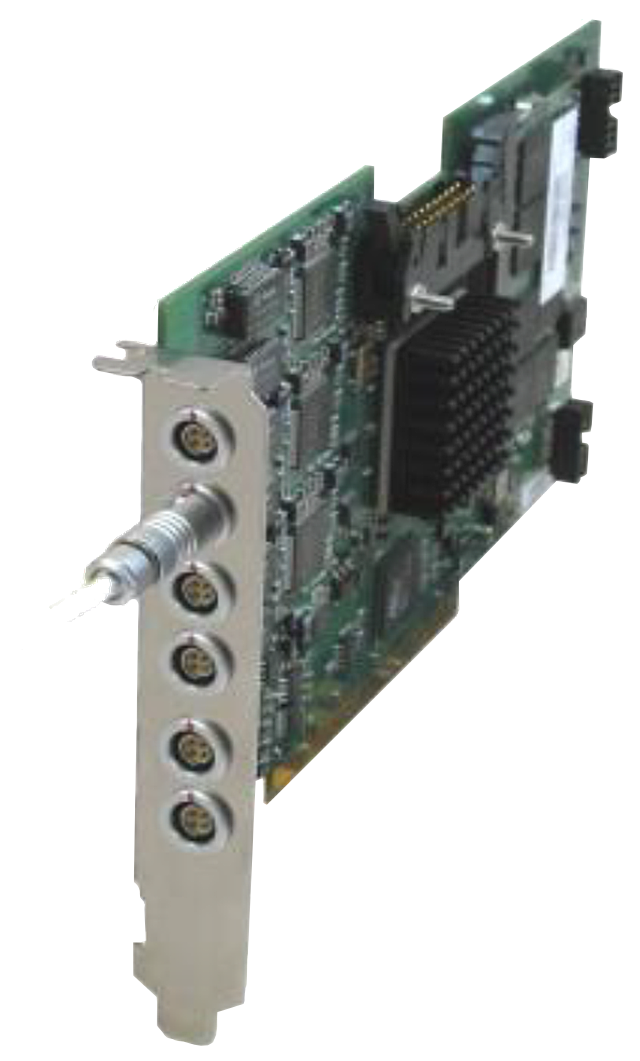
The FireSpy3852 brings out six active transformer coupled ports, two from each bus analyzer, to 6 LEMO connectors.
The AS5643/1 active transformer coupled ports can only operate at S400 and S800 Beta mode data rates, while the bilingual ports can operate in S100, S200 and S400 legacy mode and S400 and S800 Beta mode.
The FireSpy385x products utilize the same FireDiagnostics Suite™ software as all other FireSpy bus analyzers. However, all three bus analyzer engines are presented in a single GUI. FireDiagnostics Suite™ software supports Windows™ Operaing Systems. Additionally, the FireDiagnostics Suite API allows you to build your own control software using C/C++ or LabVIEW™.
The seamless integration of the AS5643 protocol makes the FireSpy385x products the preferred tool for many Aerospace & Defense development, testing and product qualification tasks. DapTechnology has made considerable efforts to fully support the SAE AS5643/Mil1394 protocol in all major functional areas of the FireSpy385x and continuously updates the analyzer functionality according to implementation requirements and ongoing standardization efforts.
End of Sales Aug 2020
not recommended for new designs
replaced by: FireSpy3422bT
| Dimensions: | Half length PCI card, 15mm x 106mm x 174mm |
| Weight: | 150 g |
| Power Requirements: | 10 Watt maximum |
| Regulatory compliance: | FCC Class A , CE |
| Connections: |
32bit/33MHz PCI connector, universal keyed (for 3.3V and 5V slots) FS3850: High-density (VHDC type) connector for 6 active transformer coupled 1394 Beta ports and 3 xIEEE-1394 9-pin bilingual connectors FS3851: same as FS3850 with enhanced VHDCI stability FS3852: 6 LEMO connectors for 6 active transformer coupled 1394 Beta ports |
| Indicators: | - |
| Switches: | - |
| Part Number: |
FS385 ( FS385AS5643 with AS5643 SW protocol package) FS3851E ( FS3851EAS5643 with AS5643 SW protocol package) FS3852 ( FS3852AS5643 with AS5643 SW protocol package) |
| Codes: |
Export Control: EAR99 HTS: 9031.80.80.85 |
|
SW Add-on modules:
|
SBP2 protocol software package IIDC protocol software package AV/C protocol software package IP1394 protocol software package AS5643 protocol software pack |


Download the FireSpy Value Justification Whitepaper as a PDF
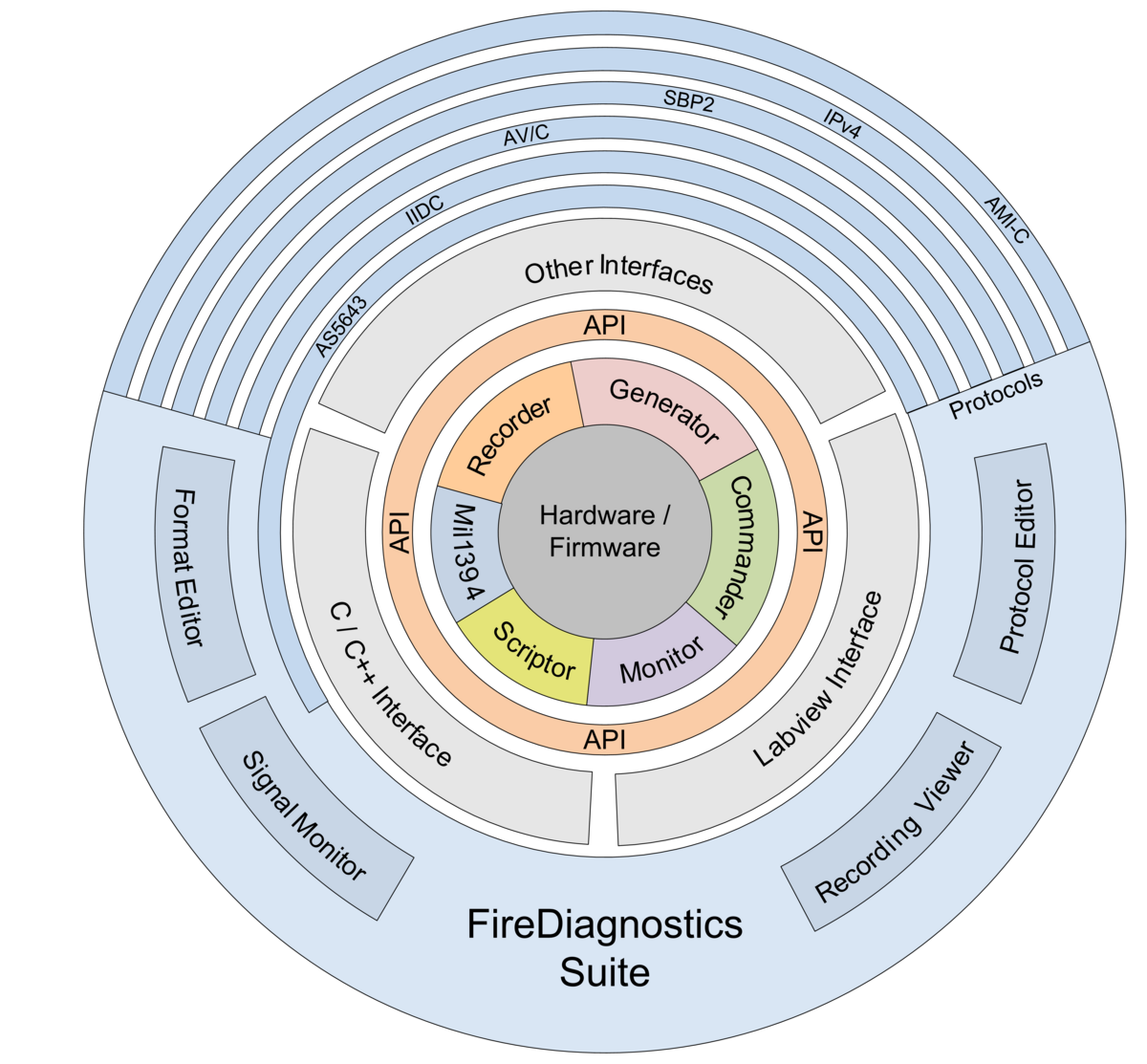
The FireDiagnostics Suite is the most comprehensive collection of 1394 analysis, simulation and interface tools for a wide range of applications. Apart from well established and hardware assisted analyzer tools like Monitor, Recorder, Generator, Commander, Scriptor and Mil1394 Signal Monitor, the suite also offers a set of software tools designed to allow the integration of the FireSpy products in a wide variety of testing applications, as well as extend customization of its functionality beyond the baseline feature set provided by DapTechnology.
The foundation for all software tools included in the FireDiagnostics Suite is formed by the Application Programming Interface (API). With its interfaces for a wide range of development environments using C/C++ or LabVIEWTM on WindowsTM Operating Systems, the application of FireSpy analyzers is extremely flexible. With its feature-rich function library, all hardware assisted analyzer tools like the Monitor and Recorder can be controlled as well as more low-level 1394 bus functions.
A cornerstone of FireDiagnostics Suite functionality is the unparalleled level of support for high-level protocols. With IEEE-1394 being the basic data exchange mechanism application specific protocols for the PC & storage environment (IPv4, SBP2), consumer electronics (AV/C, HAVi), Automotive Infotainment (AMI-C), Industrial Imaging (IIDC) have been successfully deployed. In recent years AS5643 has been adopted for use within Aerospace and Defense and largely fueled the continuous growth of IEEE-1394.